
Sebastian Previous Residents by Era
A Sebastian address can pass through several record eras. The present parcel card gives the stable starting point: parcel ID, legal description, current owner, mailing address, building facts, and recent value history. It does not list a full household. Older evidence sits in deed instruments, directories, census indexes, tax microfiche, and city files. The table marks verified local coverage and states where the research has a gap rather than inventing a start date.
| Source | Years It Covers | Where Held | What It Shows |
|---|---|---|---|
| Landmark Official Records | Online start not published | County Clerk portal and courthouse | Deed parties and recorded instruments |
| Local directories | 1885 to 1932 | Lowenstein Archive Center and online surname index | Names, occupations, spouses, firms, and towns |
| Census indexes | 1940 federal; 1945 Florida | Lowenstein Archive Center | Households and census placement |
| Telephone directory | 1955 subscribers, published 1956 | Lowenstein Archive Center | Listed subscribers and addresses |
| Final tax rolls | 1988 to 1997, incomplete | Library microfiche | Owner and tax-roll evidence |
| City permits and code files | Start dates not verified | Building Department, WebLink, or request | Projects, alterations, inspections, and cases |
For a recent transfer, begin with the Indian River County Property Appraiser and move into the Clerk's Landmark Official Records. For a household before the modern parcel roll, call the archive desk and ask for the precise directory, census, or tax medium. The online surname index is a finding aid, not a substitute for its source volume.
Start With Sebastian's Parcel Card
Enter the location address with as little text as possible. The Property Appraiser recommends a surname or street number first, then one more term only if the result set is broad. Record both the situs address, meaning the physical parcel address, and the owner's mailing address. A different mailing address may signal an absentee owner, but it says nothing certain about the people inside the house.
Copy the parcel ID and full legal description before opening another source. Street spelling and house numbers can change, while a subdivision, lot, block, or metes-and-bounds description gives the deed search a firmer identity. A homestead exemption can support an owner's permanent-residence claim for tax purposes. It still does not name relatives, roommates, or other previous residents.
For the full current address workflow, use the Sebastian street directory. Keep this backward search focused on the same parcel through time.
Walk Sebastian Deeds Backward
The Indian River County Clerk of the Circuit Court & Comptroller keeps deeds, mortgages, liens, plats, and related instruments. Landmark offers Name, Document, Case Number, Book/Page, Consideration, Parcel ID, Record Date Range, Instrument Number, and Legal Description searches. The first online year is not stated on the public landing page, so an empty result must not be treated as proof that no earlier deed exists.
- Pull today's parcel card and save its owner, parcel ID, and legal description.
- Try the parcel ID in Landmark, then search the owner by name and likely purchase dates.
- Open the acquisition deed. Note the grantor, grantee, instrument number, book and page, date, and legal description.
- Search that grantor as a grantee in an earlier date range. Confirm the same land description at each link.
- When online results stop, request a staff search or inspect courthouse deed books and indexes.
- Grantor and grantee
- The grantor transfers the property; the grantee receives it.
- Chain of title
- The linked series of transfers for the same land.
- Legal description
- The recorded land identity, often stated as subdivision, lot, and block rather than a street address.
- Instrument number
- The Clerk's unique locator for a recorded document.
Copies cost $1 per page, oversized pages cost $5, and an online or walk-in e-certification costs $9 plus $1 for each additional page. A Clerk staff search costs $2 per name for each year searched. Confirm the needed format before ordering.
When Sebastian's Online Index Ends
Landmark's public page does not publish its earliest indexed or imaged year. Older deeds may therefore require the courthouse counter, a written records request, or a staff search. The Clerk's records-request page explains direct request routes and copy access. Indian River County formed in 1925 from northern St. Lucie County, so a pre-1925 Sebastian trail may also point into predecessor records.
Carry the book and page, names, dates, and legal description from the newest known instrument to the counter. Ask whether the next link is in an older direct or reverse index. Florida Public Records Law allows requests without a stated purpose or identification in general, though statutory copy fees and a reasonable special-service charge may apply to extensive work.
Note: A blank online screen marks a search limit, not a proven break in Sebastian ownership.
Match Sebastian Directories and Census
Deeds identify title holders, not every person who lived there. The Lowenstein Archive Center's local-history holdings add a surname index for directories from 1885 through 1932, the 1925 Fort Pierce extract, Sebastian pages in the 1927 Vero Beach directory, a partial 1931–32 Southern Bell volume, a 1940 federal census index, a 1945 Florida census index, and a 1955 subscriber snapshot published in 1956. Use the Sebastian directory book page for the collections themselves.
- Search all surname spellings and initials in the county's directory PDF.
- Write down the exact year, source code, town, occupation, spouse notation, and page reference.
- Ask Lowenstein for the original volume and inspect its key, ads, street section, and nearby entries.
- Pair directory years with the nearest public census, then test names against deeds, probate, newspapers, and cemetery records.
The 1927 volume puts Sebastian residents on pages 162 through 164, but research did not verify a separate Sebastian criss-cross run. A criss-cross directory is arranged by address or phone number instead of surname. Do not promise address-first coverage that the catalog does not document.
Gaps in Sebastian Previous Residents
The surviving 1931–32 Southern Bell directory ends at the letter S because pages are missing. Final tax-roll microfiche for 1988 through 1997 is incomplete. Early directory extracts also omit many exact house numbers. These are known limits, not reasons to fill a blank with a guess.
Use the same person in several sources. A directory may show a spouse and occupation, a census may reveal household ties, and a deed may prove title. Variant forms matter: initials can become full names, a spouse may appear as “wife” in one year and by name later, and a surname may be misspelled. The county's compiled index preserves those shifts.
Sebastian Permits, Probate, and Obituaries
Sebastian's permit page routes current project and inspection work through MGO Connect and the Building Department. A permit can date an addition, repair, or other physical change. The applicant or contractor is not automatically an occupant. Historical start dates were not verified, so ask the city clerk for older files through WebLink, email, mail, phone, or an in-person request.
At the end of a known owner's trail, Indian River County probate filings can identify an estate and case parties. Lowenstein also lists obituary guides, local newspapers, cemetery materials, family files, and licensed research databases. Exact obituary-index dates were not published in the inspected summary. Ask staff to check the relevant name and date instead of claiming full coverage.
One Sebastian Household Preserved
The Hallstrom House and Farmstead shows what public rolls leave out. The 1918 house preserves papers, photographs, furniture, artifacts, and memorabilia tied to Swedish immigrant Axel Hallstrom and his daughter Ruth. The property was bequeathed in 1999, transferred to the Historical Society in 2000, and listed on the National Register in 2002.
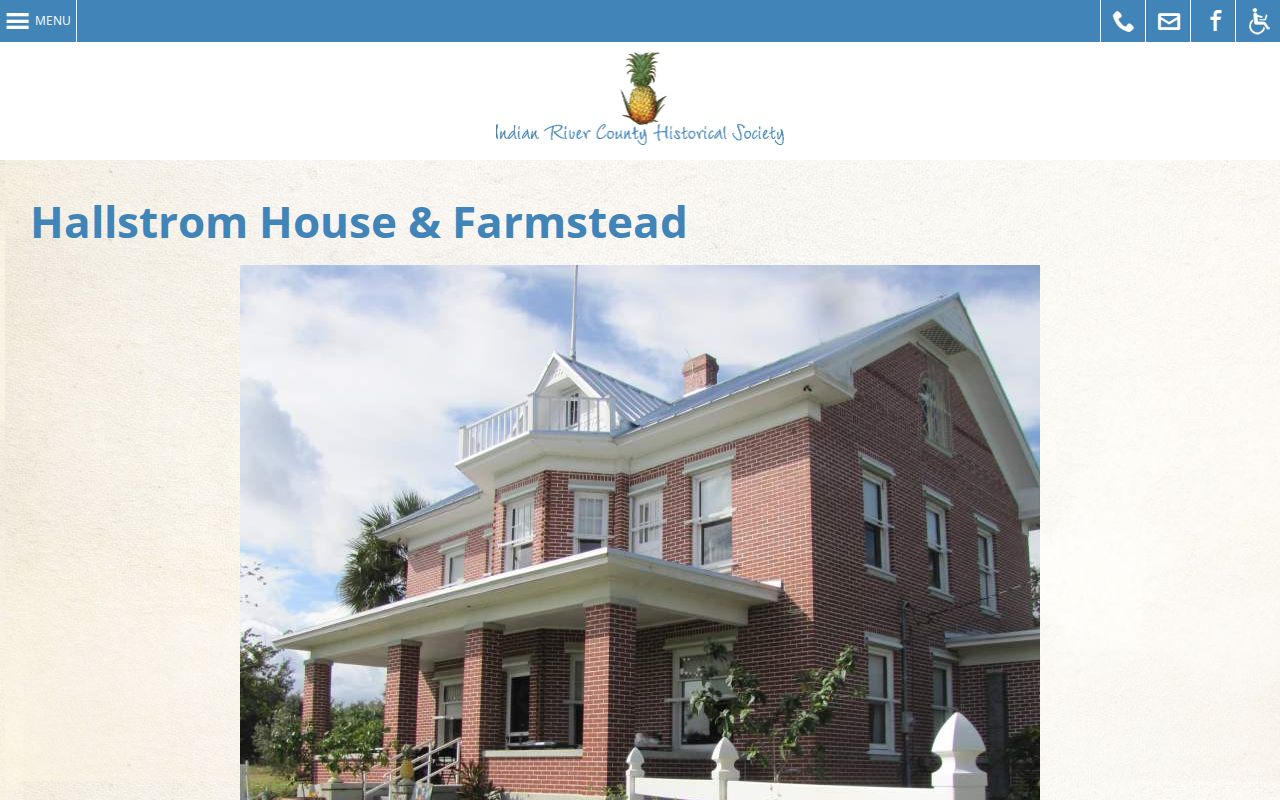
It is a strong model for house history: public deeds establish transfers, while family papers explain daily life. Most homes will not have such a complete archive, but Lowenstein's donated family files and the Historical Society can hold clues unavailable in a tax roll.
Ask Sebastian's Archive Specialists
The Lowenstein local-history holdings page is the best route when a previous-residents search crosses media. The 4,000-square-foot archive is on the Main Library's second floor at 1600 21st Street in Vero Beach. Call 772-400-6324 or email genealogy@irclibrary.org before visiting. Staff and volunteers work with books, periodicals, maps, film, fiche, newspapers, family collections, and scanners.
The Sebastian branch at 1001 Sebastian Boulevard is convenient for general library help, but the specialized genealogy room is in Vero Beach. Call first with a surname, address, date range, subdivision, and known record citation. That lets staff identify the correct shelf or microform without implying that every item is online.
Use Sebastian Address History Lawfully
Previous residents are best researched for genealogy, estate and heir questions, historic preservation, and curiosity about a home's past. Property rolls and deeds are public evidence about land. They are not live tracking tools, and a mailing address cannot prove that a person is at the site today.
Lawful use. Use Sebastian house history with care. Never use an address trail to watch, harass, intimidate, or harm a living person.
Florida's Address Confidentiality Program can substitute an address for a qualifying victim. Voter and other public files also withhold protected fields. Respect those protections. Label every saved note with the source and access date, and separate confirmed facts from leads.